Can You Fly a Drone Over Private Property in the US? (State & FAA Laws)
Can You Fly a Drone Over Private Property in the US? (State & FAA Laws) depends on more than who owns the land. You must follow Federal Aviation Administration rules, state privacy laws, and local restrictions.
You may also need permission to take off or land there.
As of 2026, most drone flights must stay at or below 400 feet above ground level. The legal answer changes with your purpose, location, aircraft, camera use, and airspace. Start by separating federal flight rules from private-property rights.
Can You Fly a Drone Over Private Property in the US? (State & FAA Laws)
Can You Fly a Drone Over Private Property in the US? (State & FAA Laws)
Yes, you can often fly over private property if the flight follows FAA rules and applicable state or local laws.
Property ownership doesn’t control all airspace above the land.
The FAA regulates aircraft operations in US navigable airspace.
State laws may restrict surveillance, harassment, or recording.
Permission may still be needed for takeoff, landing, or access.
FAA Airspace Rules vs. Private-Property and Privacy Rights
The Federal Aviation Administration controls the safety rules for drone flights in US airspace. The FAA generally doesn’t decide whether your camera use violates a homeowner’s privacy or whether you entered private land. Those questions can involve state law, local ordinances, and civil courts.
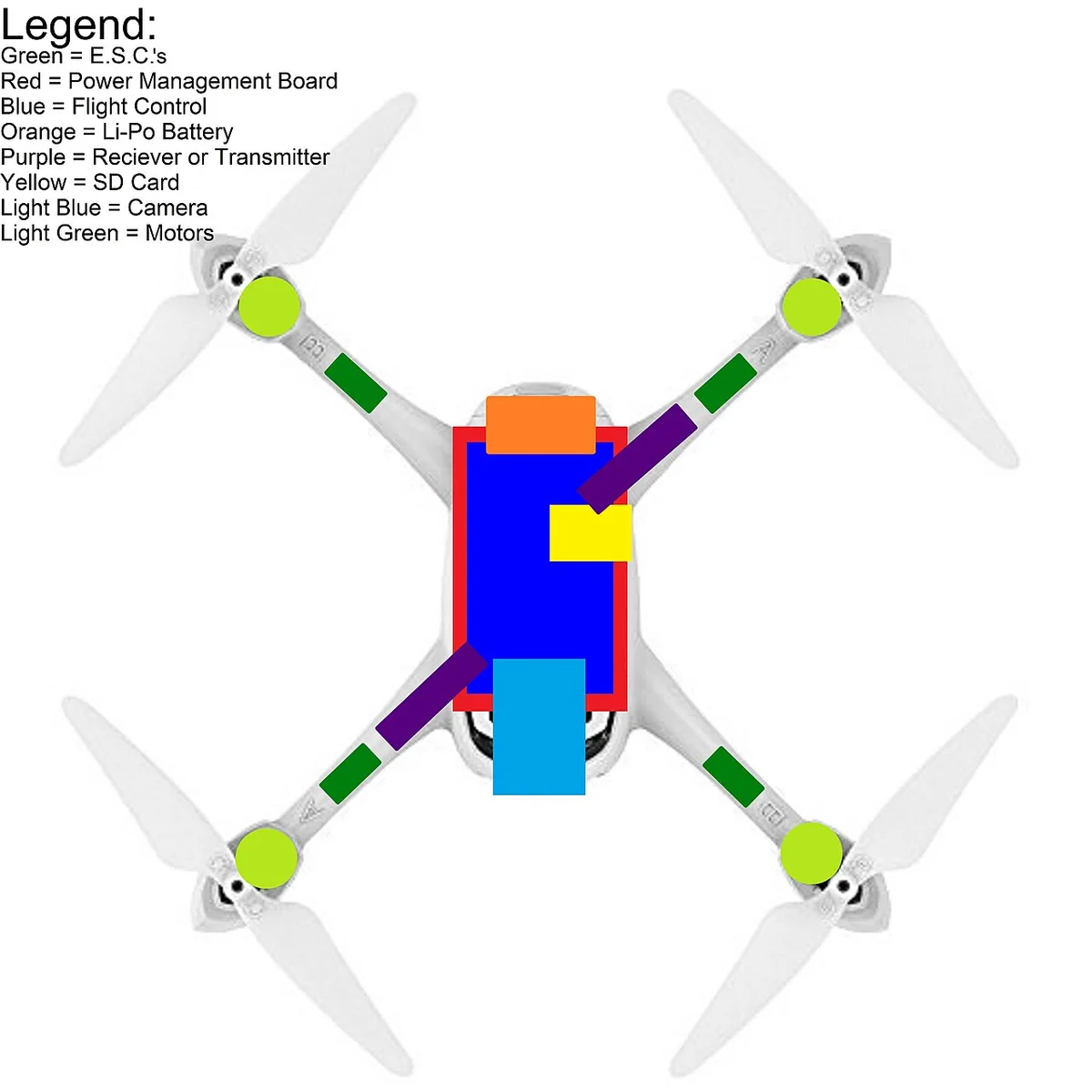
Image source: Wikimedia Commons / Glosome (CC BY-SA)
A private homeowner usually can’t create a personal “no-fly zone” across all airspace above the property. Still, that doesn’t give a pilot unlimited freedom. Repeated hovering, low passes, targeted filming, or flights that interfere with someone’s use of land can create legal problems.
Think of the rules in separate layers:
- FAA rules: Control the aircraft, pilot, airspace, altitude, and safety conduct.
- State law: May address privacy, surveillance, harassment, stalking, or recording.
- Local rules: May restrict drone launches from parks, public buildings, or municipal land.
- Property law: Controls access to the land, including takeoff, landing, and retrieval.
- Civil law: May address nuisance, trespass, property damage, or intrusion.
The FAA’s official drone and unmanned aircraft guidance covers registration, pilot requirements, airspace, Remote ID, and operating rules. Use that information for federal compliance, then check the laws that apply where the property sits.
A camera also changes the practical risk. A drone crossing briefly over a roof is different from one that hovers outside a bedroom window. The aircraft may be lawful under FAA rules while the recording conduct creates a state privacy issue.
Check These Conditions Before You Fly
Before launching, identify the flight purpose and the exact operating location. A recreational flight follows a different qualification path from a business inspection or paid photography job.
Recreational, commercial, and government drone operations
If you fly purely for recreation, you generally operate under the recreational model aircraft exception in 49 U.S.C. § 44809. You must follow the FAA’s safety requirements and complete the FAA’s Recreational UAS Safety Test, known as TRUST.
If you fly for work, compensation, business promotion, or another non-recreational purpose, Part 107 usually applies. That means the remote pilot needs an FAA Remote Pilot Certificate, and the operation must follow Part 107 unless a waiver or another authorization applies.
Drone registration, Remote ID, and weight
Check the aircraft’s takeoff weight before flying. Most drones weighing more than 0.55 pounds, or 250 grams, must be registered with the FAA. Recreational operators also face registration requirements at or above that threshold.
Many registered drones must comply with Remote ID. This system broadcasts identification and location information during flight. A drone may also need a Remote ID module if its built-in equipment doesn’t meet the rule.
Airspace and operating conditions
Check the airspace before every flight. Confirm the following:
- Airspace class and altitude limits
- LAANC authorization requirements
- Temporary flight restrictions
- Nearby airports and heliports
- Visual line-of-sight requirements
- Night-operation conditions
- Operations over people or moving vehicles
- Emergency activity or wildfire restrictions
Decision Tree: Is This Drone Flight Legal?
Use this decision process before you launch. If any answer creates uncertainty, pause the flight and verify the rule through the FAA, local authorities, or a qualified attorney.
1. Are you flying for recreation?
- Yes: Complete TRUST, follow recreational flight rules, and register the drone when required.
- No: Use Part 107 or another applicable FAA authority. Confirm that the pilot holds the required certificate.
2. Is the airspace authorized?
- Uncontrolled airspace: Continue checking altitude, visibility, safety, and local restrictions.
- Controlled airspace: Obtain FAA authorization when required, often through LAANC.
- Temporary flight restriction or special-use airspace: Do not fly unless you have the specific permission required.
FAA authorization only answers the aviation question. It doesn’t grant permission to enter private land or record private activity.
3. Do you need access to the property?
- Launching or landing there: Get permission from the owner, tenant, or property manager.
- Retrieving a crashed drone there: Don’t climb fences or enter posted land. Request access.
- Flying across the property from elsewhere: Continue checking privacy, nuisance, and local rules.
4. Will the drone capture people or private spaces?
- No: Follow ordinary safety and airspace requirements.
- Yes: Avoid windows, enclosed yards, private conversations, and sensitive activities. Check state recording and privacy laws before recording.
5. Does the flight create a safety or harassment concern?
- No: Maintain visual line of sight and operate within the applicable limits.
- Yes: Change the route, altitude, timing, or purpose. Don’t use a drone to intimidate, follow, stalk, or repeatedly disturb someone.
A short, necessary overflight is easier to defend than prolonged hovering over a backyard. Keep the flight path narrow, the purpose clear, and the camera pointed away from private areas whenever possible.
State Privacy Laws, Trespass Rules, and Local Drone Restrictions
State law can make a lawful FAA flight legally risky if the operation involves surveillance or intrusive recording. The exact rule depends on the state, the location, the person recorded, and what the drone captured.
Privacy laws may cover:
- Recording someone in a place where they reasonably expect privacy
- Looking through windows or into enclosed areas
- Capturing private conversations
- Repeatedly following or monitoring a person
- Using images for harassment, intimidation, or unlawful purposes
- Recording audio without the consent required by state law
Trespass is a separate issue. Flying over land doesn’t automatically equal walking onto it. But launching from a private yard, crossing a fence to recover the aircraft, or standing on private property without permission can create a direct access problem.
Local rules may also control where you can launch. A city, county, park agency, or homeowners association may restrict drone operations on its land, even though it cannot rewrite FAA airspace rules.
Before flying, check:
- The state’s official statutes for drone privacy and surveillance.
- State trespass, nuisance, stalking, and recording laws.
- City and county drone ordinances.
- Park, airport, school, and critical-infrastructure restrictions.
- Any posted property rules or launch-site requirements.
Don’t assume a drone app’s map answers every legal question. Airspace data can show where flight authorization is needed. It usually won’t explain whether your camera use violates state privacy law or whether a local park bans takeoff.
A Safe Preflight Workflow for Private-Property Overflights
Use a repeatable preflight process instead of relying on a quick glance at a drone app. Start with the property address, launch location, flight purpose, and planned altitude.
Confirm the operation type. Decide whether the flight is recreational, commercial, educational, or governmental. This determines which FAA rules and pilot credentials apply.
Check the aircraft. Confirm registration, Remote ID status, battery condition, firmware, and maximum takeoff weight. Make sure the registration number is visible or properly recorded.
Check the airspace. Review FAA airspace data, LAANC requirements, temporary flight restrictions, airport notices, and emergency activity. Get authorization before entering controlled airspace.
Confirm launch permission. Ask the property owner, tenant, park authority, or site manager before taking off or landing. Keep written permission for commercial work or disputed locations.
Plan the route. Set a legal altitude, maintain visual line of sight, and avoid windows, enclosed yards, crowds, roads, and sensitive facilities. Keep the camera pointed away from private areas when possible.
Set a stopping point. Land immediately if visibility drops, a person enters the operating area, an aircraft approaches, or the flight begins to feel intrusive.
For commercial work, record the address, authorization, pilot certificate details, weather, time, and operating limits. That documentation can help explain the flight if a property owner, police officer, or FAA inspector raises questions.
Common Drone-Law Mistakes That Create FAA or Civil Liability
The most common mistake is treating FAA compliance as complete legal permission. A pilot may have valid LAANC approval and still create a privacy, nuisance, or trespass dispute through the way the drone is operated.
Avoid these errors:
- Launching without permission: Airspace authorization doesn’t allow access to private land.
- Hovering over sensitive areas: Extended hovering near bedrooms, bathrooms, fenced patios, or private conversations increases privacy risk.
- Recording everything: Capture only what the job requires. Disable audio when it isn’t needed.
- Ignoring local launch rules: Cities and park agencies may restrict takeoff from their property.
- Flying beyond visual line of sight: A live video feed doesn’t replace direct visual observation.
- Skipping airspace checks: Conditions can change because of wildfire response, sporting events, VIP movement, or temporary restrictions.
- Confronting residents: Stay calm and explain the flight purpose. Don’t argue, threaten, or attempt to seize someone’s drone.
- Shooting at a drone: Damaging an aircraft can create serious criminal and civil consequences.
If someone complains, land safely and document the incident. Record the time, location, flight purpose, approximate altitude, and whether the camera was recording. Don’t delete relevant footage or alter flight logs.
Report aviation safety concerns to the FAA. Report suspected stalking, unlawful surveillance, threats, or trespass to local law enforcement. A property dispute involving damages or repeated overflights may require advice from a state-licensed attorney.
Frequently Asked Questions
Can my neighbor legally stop my drone from flying over their property?
Your neighbor usually can’t control all airspace above their land, but they may challenge unsafe or intrusive conduct. They can object to launching from their property, recording private activities, repeated hovering, harassment, nuisance, or trespass. The FAA handles aviation rules, while state courts and local law may address privacy and property disputes.
Do I need permission to fly over private property?
You may not need the owner’s permission for every lawful overflight, but you need permission to access private land for takeoff, landing, or recovery. Consent also reduces privacy and nuisance concerns. Always check state law, local rules, and property restrictions before recording people or private spaces.
How high can a drone fly over a private house?
Most drone operations must remain at or below 400 feet above ground level, subject to the applicable FAA rule and operating conditions. The 400-foot limit doesn’t create a right to fly anywhere. You still need to follow airspace authorization, visual line-of-sight, safety, privacy, and local requirements.
Can I record video of a neighbor’s backyard with a drone?
Recording a backyard can create legal risk when the flight targets private activity or areas where people expect privacy. State surveillance, voyeurism, harassment, and recording laws may apply. Keep the camera focused on the authorized subject, avoid windows and enclosed areas, and obtain consent when practical.
What should I do if a drone keeps flying over my house?
Document the dates, times, conduct, approximate altitude, and any visible recording. Don’t damage or confront the aircraft. Contact local law enforcement for threats, stalking, or suspected unlawful surveillance.
Report unsafe aviation conduct to the FAA, especially when the drone endangers people or other aircraft.